

Bark Scorpions in Fort Lauderdale, FL: Why Cooler November Nights Drive Them Into Garages, Shoes and Storage Boxes
Bark Scorpions in Fort Lauderdale, FL: Why Cooler November Nights Drive Them Into Garages, Shoes and Storage Boxes
You reach for a sneaker in the garage, tip it over out of habit, and a slender, reddish-brown scorpion drops onto the concrete. If that sounds familiar, you’re not alone. When the first cooler, drier nights of November settle over Fort Lauderdale, we start hearing from neighbors searching for scorpion control Fort Lauderdale homes can rely on, and wondering why these night hunters suddenly seem to be everywhere.
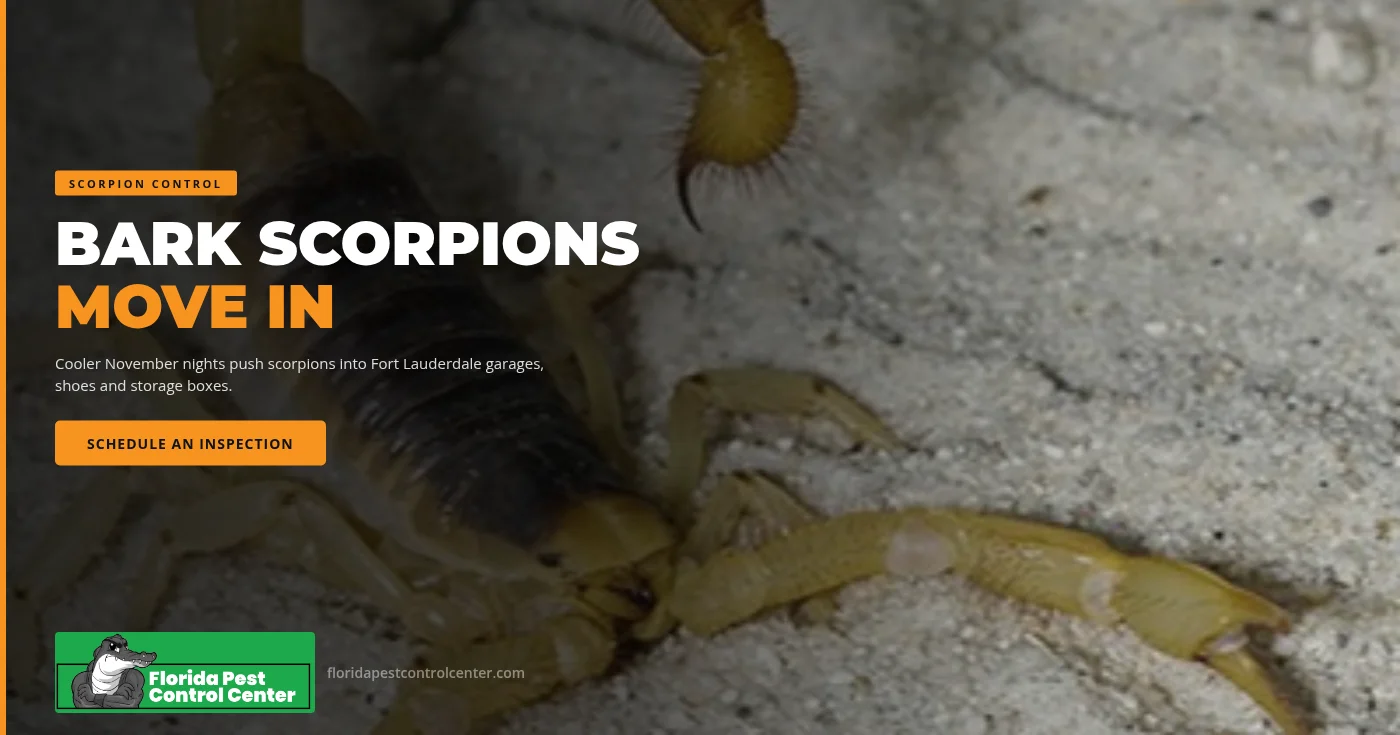
The scorpion most of us find indoors is the Florida bark scorpion, a native species that hides by day and hunts insects by night. It isn’t looking for you. It’s looking for shelter and food, and this time of year your garage, closet floor and stacked boxes can offer both. Here at Florida Pest, we see the same pattern every fall: a few surprise sightings, followed by the discovery of a roach or cricket problem that kept the scorpions fed.
In this post we’ll cover how to identify the species, why November seems to bring scorpions in South Florida homes closer to people, where they hide, what a sting feels like and the sealing steps that make the biggest difference. We’ll finish with how professional treatment works and answers to common questions.
Meet the Florida Bark Scorpion: South Florida’s Most Common Household Scorpion
The name causes a lot of confusion, so let’s start there. The University of Florida’s Featured Creatures program describes the scorpion South Floridians most often call the “Florida bark scorpion” as Centruroides gracilis, also known as the slenderbrown scorpion. It’s one of the larger scorpions in the state, reaching roughly four inches, and ranges from reddish-brown to nearly black.
Many online articles about the “bark scorpion” are actually describing a different species found out West, Centruroides sculpturatus, whose venom is considered much more potent. Sting warnings written about that species don’t apply directly here, so read carefully.
Florida has a few native scorpions, including the smaller, tan Hentz striped scorpion that is common across much of the state. In Broward County, though, the larger brown species is usually the one homeowners notice in garages and utility rooms.
Quick Identification Tips
- About two to four inches long as an adult
- Reddish-brown to dark brown body, often with lighter legs
- Slim pincers and a long, segmented tail ending in a stinger
- Active at night and usually hiding when you find it during the day
Like other scorpions, it glows a bright blue-green under an ultraviolet flashlight, which makes spotting them after dark much easier.
Why November’s Cooler, Drier Nights Push Scorpions Indoors in Fort Lauderdale
November is typically the first full month of South Florida’s dry season, which generally runs from late October into May. Overnight lows often dip into the 60s, humidity drops and the afternoon showers fade. For a cold-blooded hunter, those shifts matter.
We want to be careful here: there isn’t solid research showing a mass migration of scorpions into homes every fall. What we can say is that several changes tend to line up at once. Outdoor insect activity slows as nights cool, so scorpions may wander farther looking for prey. Sheltered, slightly warmer spots, like a garage, a laundry room or the space behind a water heater, become more appealing. And many of the roaches and crickets scorpions eat are heading toward buildings too.
There’s a human side to the season as well. Snowbirds return in November and open homes, garages and storage units that have sat closed since spring. Boxes that haven’t moved in months are perfect scorpion shelter, so the first unpacking session is often when sightings happen. Year-round residents see the same thing when they pull holiday decorations out of the garage.
Finally, hurricane season officially ends on November 30, and many yards still hold stacked branches, lumber or leftover storm debris, which brings us to the next point.
Where Scorpions Hide: Garages, Shoes, Storage Boxes, Mulch Beds and Storm Debris
Scorpions spend daylight hours pressed into tight, dark, undisturbed spaces. Around a typical home, these are the spots we check first.
Inside the Garage and Home
Garages are the top indoor hot spot we see. Gaps under the garage door, cluttered shelving and cardboard on the floor give scorpions a direct route in and plenty of places to settle. Inside, check closets, under sinks, behind appliances, in laundry piles and in bathrooms, where plumbing gaps add moisture.
Shoes, Gloves and Storage Boxes
Anything left on the floor and rarely moved is fair game: shoes by the door, gardening gloves, beach towels and especially cardboard boxes. Cardboard’s corrugated layers and folded flaps are ideal tuck-in spots, and it softens in humidity, creating even more crevices. To keep bark scorpions out of shoes and storage boxes, store items off the floor in sealed plastic bins and shake out footwear before you put it on.
Mulch Beds, Palms and Storm Debris
Does mulch attract scorpions in South Florida? Mulch alone isn’t the draw, but thick layers hold moisture and insects, creating a comfortable hunting ground right against your foundation. Palm boots, loose bark, firewood, pavers, potted plants and storm debris piles serve the same purpose. If your landscaping is also hosting plant-feeding insects, our landscape pest control service can help reduce the activity that keeps scorpions around.
What a Scorpion Sting Feels Like and When to Call a Doctor
We’re pest professionals, not medical providers, so treat this as general information and follow your doctor’s advice. Stings from Florida’s native scorpions are usually compared to a bee or wasp sting: sharp, burning pain at the site, followed by swelling, redness and sometimes numbness or tingling that can last for hours.
For most healthy adults, these stings are painful but rarely serious. Young children, older adults, people with heart or breathing conditions and anyone allergic to insect stings may face higher risk.
Basic First Steps
- Move away from the scorpion and keep the person calm
- Wash the area with soap and water
- Apply a cool compress to ease pain and swelling
- Contact the Poison Help line through the Florida Poison Information Center Network for free, confidential guidance around the clock
Call 911 right away if the person has trouble breathing, swelling of the face, lips or throat, spreading hives, dizziness or other signs of a severe allergic reaction. If a child is stung, it’s wise to contact poison control or your pediatrician even when symptoms look mild.
Pets can be stung too, usually on the nose or paws. Many recover with some pain and swelling, but call your veterinarian if you notice heavy drooling, vomiting, labored breathing or unusual behavior.
The Insect Connection: Why Roaches and Crickets Draw Scorpions to Your Home
If there’s one thing we want every homeowner to remember, it’s this: scorpions go where the food is. The Florida bark scorpion eats insects and spiders, and the homes where we find repeat activity almost always have a steady supply of prey.
- Cockroaches, especially large outdoor roaches that wander in from mulch, palms and drains
- Crickets, which gather around exterior lights and slip under garage doors
- Ants and other small insects that feed spiders, which in turn feed scorpions
- Silverfish and spiders living in stored boxes and quiet corners
That’s why spraying a single scorpion rarely solves the problem; breaking the food chain does. Our cockroach control and ant control services target the insects at the bottom of that chain, and scorpion pressure often fades once those populations drop.
Lighting matters too. Bright white porch and garage lights pull flying insects in at night, and scorpions learn to hunt near them. Switching to yellow bug-light bulbs or motion-sensor fixtures is a small change that can shrink the buffet at your door.
Sealing and Cleanup Steps to Keep Scorpions Out This Fall
Scorpion prevention comes down to two goals: close the entry points and remove the hiding spots. Here’s how to seal a home against scorpions, inside and out.
Seal the Entry Points
- Install door sweeps on exterior doors and replace worn garage-door bottom seals
- Caulk gaps around pipes, utility lines, dryer vents and window frames
- Cover weep holes and vents with fine mesh that still allows airflow
- Repair torn window and door screens
- Use drain covers or stoppers in seldom-used sinks and tubs
Clean Up Hiding Spots
- Keep mulch thin and pulled several inches back from the foundation
- Trim shrubs and palm fronds so they don’t touch walls or the roof
- Store firewood and lumber off the ground and away from the house
- Clear post-storm piles promptly using your city’s and Broward County’s yard-waste pickup schedules
- Swap cardboard boxes for sealed plastic bins kept on shelves
- Shake out shoes, gloves, towels and bedding that sit unused
A UV flashlight walk around the garage and foundation an hour after dark is a useful way to see whether your efforts are working. If you’re still spotting scorpions after sealing and cleanup, the source may be hidden somewhere you can’t easily reach.
How Professional Scorpion Control Works for Fort Lauderdale Homes
When you bring in a scorpion exterminator, the goal shouldn’t be a one-time spray. Here at Florida Pest, our approach follows the logic above: find the hiding places, cut off the food supply and protect the perimeter.
Inspection
We start with a thorough look at the garage, plumbing penetrations, landscaping, mulch beds and stored materials. Where it helps, we use UV light to spot active scorpions and note where they’re concentrating.
Targeted Treatment
Based on what we find, we treat the exterior perimeter, entry points and harborage areas with products chosen for your home’s situation, applied with care around children, pets and plants. We also address the roaches, crickets and ants that keep scorpions coming back.
Prevention and Follow-Up
We’ll point out gaps, moisture issues and clutter that could invite scorpions back, and recommend follow-up visits so protection holds through the season. Results depend on the property, so we’ll be upfront about what to expect rather than promising a scorpion-free home overnight. You can explore our full range of pest control services to see how this work fits with our other treatments.
Frequently Asked Questions About Scorpion Control in Fort Lauderdale
Why am I finding scorpions in my Fort Lauderdale garage in November?
Cooler nights, fewer outdoor insects and boxes that haven’t moved in months make garages attractive this time of year, and gaps under the door give easy access. Sealing that gap and moving stored items into plastic bins on shelves usually helps a great deal.
Are Florida bark scorpions dangerous to kids and pets?
For most people a sting is painful but not serious. Children, older adults, people with allergies and pets may react more strongly, so contact poison control, your doctor or your veterinarian after a sting, and call 911 for breathing trouble or facial swelling.
Can scorpions climb walls or come up through drains?
This species is a capable climber and can scale textured walls, screens and bark, which is why they sometimes turn up in ceilings or bathtubs. They may also enter near plumbing gaps, so drain covers and sealed pipe penetrations help.
Does store-bought spray kill scorpions?
A contact spray may kill a scorpion you hit directly, but it does little about the ones hiding in walls, mulch and boxes. Lasting results come from sealing, cleanup and controlling the insects scorpions eat.
Get Scorpion Control Fort Lauderdale Homeowners Can Count On
Fall doesn’t have to mean shaking a scorpion out of your shoe. With a few sealing and cleanup steps, plus help with the insects that feed them, most homes can become far less inviting to these night hunters. Here at Florida Pest, we’re a local team based in Fort Lauderdale, and we understand how Broward County scorpions, roaches and landscape pests behave through our seasons. When you’re ready for scorpion control Fort Lauderdale families can rely on, contact us to schedule an inspection, and we’ll help you find and close the spots scorpions are using before they settle in.
Can you help with scorpions and the pests that attract them?
Yes. Scorpions rarely show up alone. In most homes we inspect, they’re following a food source, so we treat the whole picture instead of just the scorpion you found in your shoe. Our goal is to make your home and yard far less inviting, and to give you real peace of mind through the cooler months.
Here’s what our service typically includes:
- A detailed inspection of garages, entry points, plumbing gaps, mulch beds, palms and stored items, using UV light where it helps
- Targeted perimeter treatment focused on the areas where scorpions hide and travel, applied with care around kids, pets and plants
- Prey insect control, including cockroaches, crickets and ants, so scorpions have less reason to stick around
- Practical prevention advice on door sweeps, sealing gaps, storage and landscaping changes
- Follow-up visits when needed to keep protection steady through the season
Because every property is different, we’ll walk you through what we find and what to realistically expect. If your yard has ongoing plant pest or ant activity, we can also pair this work with our landscape pest control or ant control services.
Ready to stop the surprises in your garage and closets? Reach out to our team to schedule an inspection, and we’ll help you take back your space this fall.