

Brown Widow Spiders in Pompano Beach, FL: Why Dry Season Brings Them to Patio Furniture, Pool Cages and Grills
Brown Widow Spiders in Pompano Beach, FL: Why Dry Season Brings Them to Patio Furniture, Pool Cages and Grills
November is when outdoor living comes back to life. The humidity eases, the afternoon downpours fade, and the patio chairs, grill and pool deck that sat mostly untouched all summer suddenly look inviting again. It’s also when we get the most questions about brown widow spider control in Pompano Beach, because reopening those spaces often means reaching right into the spots where these spiders have quietly settled in.
Brown widows belong to Florida’s widow spiders, a small group that University of Florida researchers note carries medically significant venom. The same researchers describe widows as shy and non-aggressive, and most encounters happen by accident. Here at Florida Pest, we find these spiders on lanais, pool cages and patios all the time, and a little knowledge goes a long way.
Below, we’ll cover why the dry season puts brown widows where you’re about to spend time, how to identify them and their egg sacs, where to look first, what to do about a bite and how to make your yard less appealing to them over the long run.
Why November’s Dry Season Puts Brown Widows Where Pompano Beach Families Gather
South Florida’s dry season generally runs from about mid-October into May, bringing lower humidity, comfortable afternoons and far less rain than summer. Lanais fill with guests, kids get back in the pool and the grill gets fired up again.
Brown widows don’t follow that calendar. In our mild climate, they can stay active and reproduce year-round. What changes in November isn’t necessarily the number of spiders—it’s how often people disturb the places those spiders have been living. A stack of chairs in the pool cage corner, a covered grill or a deck box full of pool noodles can sit for weeks without being touched. To a brown widow, that’s ideal: sheltered, quiet and close to a steady stream of insects.
Why there seem to be more spiders on the lanai in November
More often than not, they were there all along. You’re simply noticing them now that you’re moving furniture, wiping down tables and pulling decorations out of storage. That makes the start of the season the ideal moment for outdoor spider control in Broward County, before the busiest weeks of patio use arrive.
How to Identify Brown Widow Spiders and Their Spiky Egg Sacs
Brown widows are smaller and lighter in color than the glossy black widow most people picture, which makes them easy to overlook. According to UF/IFAS Extension’s guide to common Florida spiders, the state is home to several widow species, including the southern black widow, northern black widow, red widow and brown widow. UF/IFAS Gardening Solutions also lists the brown widow among the spiders Florida gardeners are likely to meet.
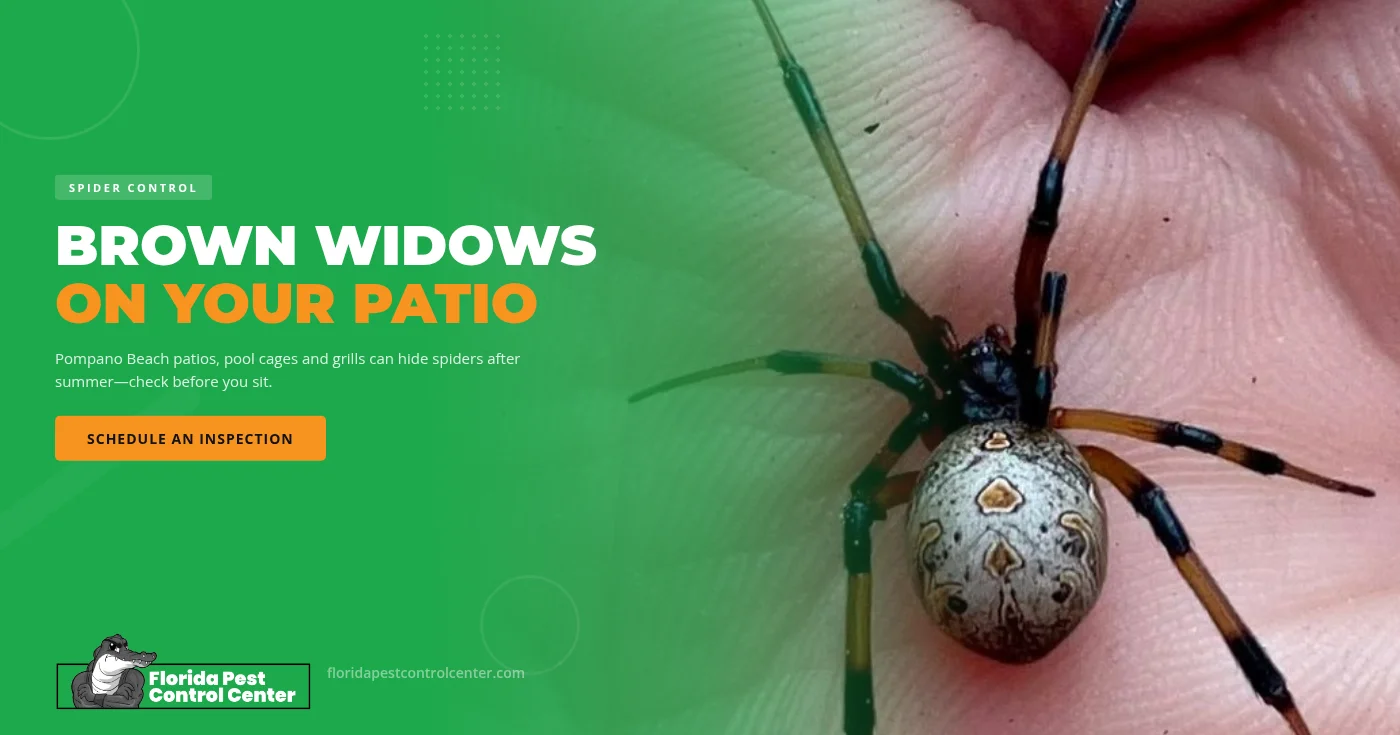
What the spider looks like
- Color: Females range from light tan to very dark brown, often with a mottled pattern on top of the abdomen.
- Hourglass: Like other widows, the female has an hourglass on the underside of her abdomen. On brown widows it’s commonly orange rather than bright red.
- Legs: Many show light and dark banding on the legs.
- Web: Widows build a messy, irregular cobweb and usually hang upside down in it, often under an overhang or in a corner.
The egg sacs are the giveaway
Brown widow egg sacs are often easier to spot than the spider herself. They’re typically described as tan or off-white, roughly half an inch across and covered in small pointed bumps—many people compare them to a tiny spiky ball or a sweetgum seed pod. Black widow egg sacs, by comparison, tend to be smooth. Several spiky sacs clustered under a table lip or inside a mailbox usually mean a brown widow has been there a while, with more spiderlings on the way.
If you’re unsure what you’re looking at, don’t touch it. Take a photo from a comfortable distance and let a professional take a look.
Top Hiding Spots: Patio Furniture, Pool Cage Frames, Grills, Mailboxes and Storage Bins
Brown widows favor tight, dry, protected spaces close to where insects travel. Around a typical South Florida home, that describes a lot of everyday outdoor gear. These are the places we check first:
- Patio furniture: The undersides of plastic and resin chairs, hollow chair arms, the lip beneath tabletops and the folds of furniture covers.
- Pool cage frames: Joints where the aluminum framing meets the knee wall, screen channels, corner brackets and screen door tracks.
- Grills: Under the lid, inside the cabinet, around the propane tank and beneath long-unused covers.
- Mailboxes: The back corners inside and the underside where the box meets the post.
- Storage bins and deck boxes: Pool toys, gardening gloves, cushions, stacked flowerpots and children’s outdoor toys.
- Anything that stays put: Hose reels, empty planters, the gap behind outdoor AC units and the underside of railings.
Quick habits that help
Wear gloves when you pull furniture out of storage or reach into deck boxes. Shake out cushions, gloves and shoes that have been sitting outside. Flip chairs over and look before you sit, especially the first time you use them this season. Store toys and pool gear in sealed containers, and avoid stacking items against the pool cage or house walls where webs go unnoticed. A long-handled broom or vacuum attachment removes visible webs without putting your hands near them.
How Bites Happen and When to Call a Doctor
The good news is that bites are uncommon. UF/IFAS notes that widow spiders are shy and rarely bite unless they’re provoked or accidentally crushed or pinched, such as in clothing. In real life, that usually means reaching under a chair without looking, slipping on a glove left outside or grabbing a toy from the bottom of a bin.
Brown widow venom is generally considered potent, but these spiders are thought to inject less of it than black widows, and many reported bites cause mostly local pain and redness. Reactions vary, though, and some people may experience muscle cramping, abdominal pain or sweating after a widow bite.
What to do if you think you’ve been bitten
- Gently wash the area with soap and water and apply a cool compress.
- Contact Poison Control or your doctor for guidance, even if symptoms seem mild.
- Seek emergency care right away if pain spreads, cramping develops, breathing becomes difficult or you feel unwell.
Young children, older adults and anyone with health conditions should be checked promptly by a medical professional, and a pet with a suspected bite should see a veterinarian. We’re pest professionals, not doctors, so always follow your provider’s advice.
Cutting Off Their Food Supply: Porch Lights, Ants and Landscape Insects
Spiders go where the food is. Brown widows eat a wide range of small insects, so a yard with steady prey will keep attracting them. Reducing that food source is one of the most effective long-term steps you can take.
Rethink your outdoor lighting
Bright white porch and pool cage lights draw moths, beetles and other night-flying insects, and spiders quickly learn to build nearby. Yellow “bug” bulbs or warm-toned LEDs, motion sensors and switching off lights you don’t need can noticeably cut insect traffic around doors and screen enclosures.
Control the insects spiders hunt
Ants are a constant presence in South Florida yards and an easy meal for spiders. Keeping colonies away from patios, pavers and pool decks with targeted ant control removes one of their most reliable food sources. The same goes for plant-feeding insects in hedges, palms and flower beds near the house; our landscape pest control helps keep those populations in check so fewer insects drift onto your lanai.
Trim shrubs so they don’t touch screens or walls, pull mulch and leaf litter back from the foundation, and clean up crumbs and spilled drinks after outdoor meals so you aren’t feeding the insects that feed the spiders.
How Professional Brown Widow Spider Control in Pompano Beach Removes Webs, Egg Sacs and Harborage
Clearing a few webs yourself helps, but brown widows tuck into places most homeowners never see, and one missed cluster of egg sacs can repopulate a pool cage. Here at Florida Pest, we treat spider problems as a whole-property issue rather than a one-time spray.
What a visit typically includes
- Inspection: We check furniture, pool cage framing, grills, mailboxes, eaves, storage areas and landscaping for active webs, egg sacs and the insects drawing spiders in.
- Web and egg sac removal: We physically remove webs and brown widow egg sacs so new spiderlings don’t hatch and spread.
- Targeted treatment: We focus on the cracks, corners and framing where spiders shelter instead of blanketing your yard.
- Recommendations: We point out clutter, lighting and landscaping changes that make your property less inviting.
Because spiders follow their food, we often pair spider work with treatment for ants and other insects. Homeowners looking for spider control in Pompano Beach, FL, usually want more than a quick fix—they want to use the lanai without second-guessing every chair. Ask us how spider treatments fit into our broader pest control services.
Frequently Asked Questions About Brown Widow Spiders in Pompano Beach
Are brown widow spiders dangerous to kids and pets in Florida?
Brown widows are shy and bite only when pressed or trapped, but children are more likely to reach into toy bins or under furniture without looking. Teach kids not to touch webs or spiky egg sacs, store toys in sealed containers and check play areas often. If a child or pet may have been bitten, contact a doctor, Poison Control or your veterinarian promptly.
How do I get rid of brown widow spiders on my patio in Pompano Beach?
Wear gloves, remove visible webs and egg sacs with a vacuum or long-handled broom, and clear clutter. Reduce lighting that attracts insects and deal with ants nearby. For established populations or spiders inside pool cage framing, professional treatment of harborage areas tends to give longer-lasting results.
Are brown widows more dangerous than black widows?
Their venom is often described as similarly potent, but brown widows are believed to inject less, and many bites are reported as milder. Any widow bite still deserves a call to Poison Control or a medical provider.
How often should outdoor spider treatments be done?
It depends on your property, landscaping and how much activity we find. With South Florida’s year-round warmth, many homeowners prefer ongoing service over a single visit. We’ll recommend a schedule after inspecting your home.
Book Brown Widow Spider Control in Pompano Beach with Florida Pest
The dry season is the best time of year to enjoy your patio, pool and backyard, and the best time to deal with spiders that moved in while those spaces sat quiet. Recognizing brown widows and their spiky egg sacs, checking the usual hiding spots and cutting off their food supply all go a long way. When you want professional brown widow spider control, Pompano Beach homeowners can count on us for a thorough inspection and targeted treatment.
Florida Pest is based in Fort Lauderdale, and we know the pests that come with life in Broward County. Contact us to schedule an inspection and get back to enjoying your outdoor spaces with peace of mind this season.
Who can check my patio and pool cage for brown widow spiders near Pompano Beach?
We can. Here at Florida Pest, we help homeowners reclaim their lanais, pool decks and backyards from brown widow spiders, especially at the start of dry season when furniture, grills and storage bins come back into use after a long summer.
Our approach focuses on the places spiders actually live, not just the webs you can see:
- Detailed inspections of patio furniture, pool cage framing, grills, mailboxes, eaves and outdoor storage
- Removal of webs and spiky egg sacs before the next generation of spiderlings hatches
- Targeted treatment of harborage areas such as cracks, corners and screen channels
- Practical recommendations on lighting, clutter and landscaping that make your yard less appealing to spiders
Because spiders follow their food, we often look at the bigger picture too. Our ant control and landscape pest control help reduce the insects that keep brown widows coming back to your outdoor living areas.
We’re based in Fort Lauderdale and understand the year-round pest pressure that comes with South Florida’s warm climate. Whether you’ve spotted a single spiky egg sac under a chair or webs all along your pool cage, we’ll explain what we find and recommend a plan that fits your home. You can learn more about everything we treat on our pest control services page.
Ready to enjoy your patio again with peace of mind? Contact us to schedule an inspection today.