

How to Cockroach-Proof Your Lauderhill, FL Kitchen Before Summer Storms Peak
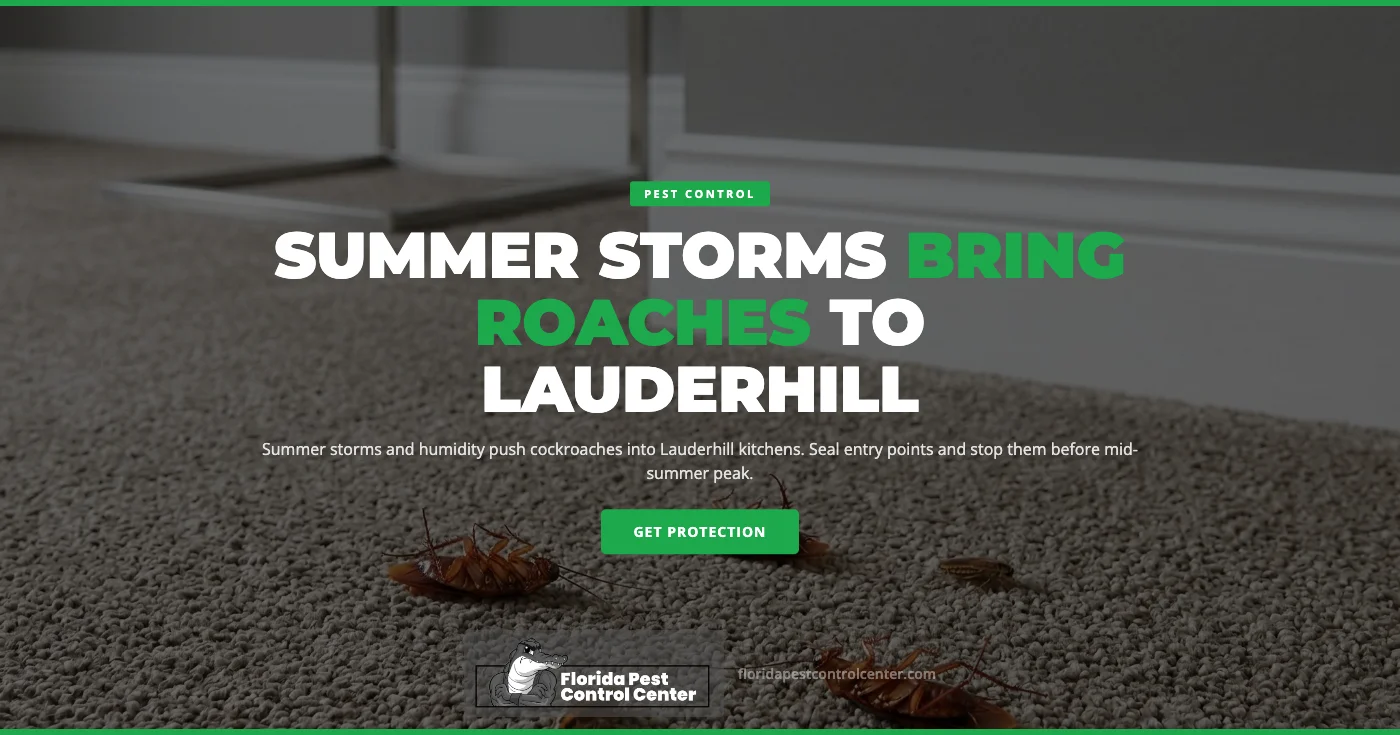
How to Cockroach-Proof Your Lauderhill, FL Kitchen Before Summer Storms Peak
When summer storms roll across Lauderhill, they do more than knock out the power for a few minutes. Heavy rainfall floods the storm drains, sewer lines, and mulch beds where South Florida's cockroaches spend most of the year — and that pushes them looking for higher, drier ground. Nine times out of ten, the closest option is somebody's kitchen. At Florida Pest Control Center, we work with homeowners across Broward County every summer who go from "we've never had a roach problem" to a full-blown infestation in the span of a single thunderstorm.
The good news is that with the right prep work, cockroach control in Lauderhill, FL does not have to be reactive. This guide walks through why summer storms make roaches worse, where they get in, and how to cockroach-proof your kitchen before peak storm season pushes them indoors.
Why Summer Storms Push Cockroaches into Lauderhill Kitchens
Florida's rainy season officially runs from mid-May through October, but Lauderhill's peak storm activity lands squarely in late July, August, and September. During these months, afternoon storms can drop several inches of rain in an hour, and when the ground cannot drain fast enough, cockroaches lose the outdoor spaces they have been living in all year.
American cockroaches — the ones locals call palmetto bugs — nest in storm drains, sewer lines, mulch beds, and tree hollows. When those spaces flood, roaches climb toward higher ground. That "higher ground" is often a garage slab, a utility penetration, or a gap under a back door. German cockroaches do not fly into homes the way palmetto bugs do, but they thrive on the humidity spike that follows every summer storm. Once indoor humidity climbs above 60 percent, they reproduce faster, hide easier, and eat almost anything.
A summer roach infestation in South Florida can go from a single sighting to a serious problem in just a few weeks if it is not addressed at the entry point. Warmer nighttime temperatures also extend their active period, meaning they travel farther and multiply faster than in cooler months. That is why the kitchens we treat in August almost always started as a "there was just one" call in June.
Cockroach Species That Invade South Florida Homes in Summer
Not every roach in Lauderhill needs the same treatment plan. Knowing which species you are dealing with changes where we bait, what we seal, and how we prevent a repeat next summer.
American cockroach (Periplaneta americana) — The most common outdoor invader in Broward County. Adults reach 1.5 to 2 inches, are reddish-brown, and can glide short distances. They live in sewers, mulch beds, and garages, and they push indoors after heavy rain. Locally, they are almost always called palmetto bugs.
German cockroach (Blattella germanica) — Smaller and tan-brown with two dark stripes behind the head. This species is rarely brought in by weather — they hitch rides in grocery bags, cardboard, secondhand appliances, or previously-infested apartments. They live and breed inside, especially near warm appliances, and are the toughest species to eliminate without professional treatment.
Smokybrown cockroach (Periplaneta fuliginosa) — Dark mahogany, slightly smaller than the American. They nest in tree hollows and clogged gutters and enter through roof penetrations, soffit vents, and attic access points.
Australian cockroach (Periplaneta australasiae) — Looks like a palmetto bug with a yellow stripe on the wings. Common around plants, wood piles, and screened lanais.
Brown-banded cockroach (Supella longipalpa) — Small, with two light bands across the back. Prefers drier, warmer spaces than the German — upper cabinets, behind picture frames, and inside electronics.
According to the University of Florida IFAS Extension, the German cockroach is the species most tied to indoor infestations, while the American cockroach drives the seasonal spike Lauderhill homeowners see after summer storms. Accurate species identification is the first step in any effective plan for cockroach control in Lauderhill, FL.
Common Kitchen Entry Points in Lauderhill, FL Homes
Cockroaches do not chew through walls. They exploit existing gaps — and every South Florida kitchen has more of them than most homeowners realize. Cockroach-proofing a Lauderhill home starts with knowing where to look.
The high-priority entry points we inspect first:
- Under the sink cabinet. Plumbing penetrations for hot water, cold water, and the drain line rarely have tight seals. Even a pencil-width gap is enough for an American cockroach.
- Behind the dishwasher and refrigerator. These appliances hide long-standing gaps around water lines, ice-maker lines, and electrical conduits. Warm motors and dark voids are ideal harborage.
- Around the range or cooktop. Gas lines, vent-hood ductwork, and the toe-kick under cabinets all connect to wall voids.
- Base of exterior doors and the door between the garage and the kitchen. A worn door sweep is the single most common invasion point after a storm.
- Window frames and screens. Gaps in stucco around windows, torn screens, and missing weep-hole covers give palmetto bugs a direct route in.
- Weep holes in exterior block walls. Standard on South Florida CBS construction. Roaches walk right through unless the holes have mesh covers.
- Sink and floor drains. Standing water in the P-trap is what keeps roaches from climbing up. Guest bathrooms and utility-room sinks that do not get used often are prime targets.
Your Summer Cockroach-Proofing Checklist
Working from the inside out, this is the kitchen cockroach prevention checklist we walk Lauderhill homeowners through before storm season peaks.
Seal the visible gaps.
- Caulk around plumbing penetrations under every sink with a silicone-based sealant that resists humidity.
- Replace worn door sweeps on all exterior doors and the door between the garage and the house.
- Cover weep holes with stainless steel mesh — never spray foam, which traps moisture against the block.
- Screen or cap dryer vents, attic soffit vents, and any unused wall penetrations.
Cut off the food supply.
- Move dry pantry goods — rice, flour, cereal, pet food — into airtight containers with gasketed lids.
- Wipe grease off the stovetop, backsplash, and the top of the range hood at the end of every cooking day.
- Empty and rinse the kitchen trash can nightly, especially during storm weeks.
- Clean under and behind the toaster, coffee maker, and any small appliance that does not get moved regularly.
Manage moisture.
- Fix leaking faucets, running toilets, and slow drains before the wet season peaks.
- Run kitchen and bathroom exhaust fans for at least ten minutes after every use.
- Keep indoor humidity below 55 percent with the AC or a dedicated dehumidifier.
Clear the outdoor invitation.
- Move mulch beds at least 12 inches away from the foundation.
- Trim shrubs and palms so nothing touches exterior walls.
- Clean gutters before every major storm — clogged gutters are a smokybrown roach nursery.
- Keep garbage bins on paved surfaces with tight-fitting lids.
Signs You Already Have a Cockroach Infestation
By the time most homeowners call us, they have been sharing the kitchen with cockroaches for weeks. The early signs are subtle:
- Droppings that look like coffee grounds or ground pepper. German cockroach droppings are tiny and cluster near warm appliances and inside pantry corners. Larger, cylindrical droppings with ridged sides usually point to American cockroaches.
- A musty, oily odor. Established populations produce a distinctive smell that lingers in cabinets, drawers, and behind the range.
- Egg cases (oothecae). Small, brown, purse-shaped capsules stuck behind appliances, in cabinet corners, or inside cardboard boxes.
- Smear marks. Dark, irregular smudges along baseboards or the underside of shelves, left as roaches travel between harborage and food.
- Daytime sightings. Cockroaches are nocturnal. If you are seeing one in the kitchen during the day, the harborage is likely overcrowded — meaning the population is larger than it appears.
- Chewed food packaging. German cockroaches will eat the glue on cardboard, paper labels, and cereal box liners.
According to the U.S. Environmental Protection Agency, cockroach droppings, saliva, and shed skins are documented indoor allergens and asthma triggers, so even a small infestation is worth investigating quickly.
When to Call a Professional Cockroach Exterminator in Lauderhill
DIY sprays and hardware-store bombs push roaches deeper into wall voids without ever touching the reproductive population. If you are seeing any of the signs above — or if you have had a repeat infestation in the last twelve months — it is time to call in a Lauderhill cockroach exterminator.
A professional cockroach control visit should include:
- A structural inspection that identifies the specific species and locates the primary harborage.
- A targeted bait plan using gel and granular baits placed in cracks, voids, and behind appliances — not sprayed on open surfaces.
- Exterior perimeter treatment with a residual product timed around storm cycles.
- Follow-up visits two to four weeks later to check bait uptake and re-treat harborage sites.
We offer both one-time and recurring Cockroach Control service across Lauderhill, and most active infestations respond within two to three visits. Recurring Residential Pest Control is the option most Broward County homeowners choose after their first summer with roaches — it keeps the perimeter treated year-round and stops storm-driven invasions before they get inside.
Long-Term Cockroach Prevention for Florida Homes
Cockroach-proofing a Lauderhill home is not a one-time project. Every rainy season resets the pressure at your perimeter, and every wall gap that is not sealed is a fresh invitation. The homeowners who stay roach-free do three things consistently:
- They inspect entry points twice a year — once before storm season and once at the end of it — and re-seal anything that has cracked, peeled, or been chewed.
- They keep the kitchen dry and food-tight year-round, not just when roaches appear.
- They maintain quarterly professional pest service so the exterior perimeter, weep holes, and under-eave harborage stay under control.
Summer storms will keep pushing roaches inland every year. With the right prep work — and the right local partner — your kitchen does not have to be their next stop.
Frequently Asked Questions About Cockroach Control in Lauderhill, FL
How do I keep cockroaches out of my kitchen?
Seal every plumbing penetration under sinks, replace worn door sweeps, keep food in airtight containers, wipe down counters and stovetops nightly, and run the exhaust fan after every use. Combine those habits with a quarterly perimeter treatment and most kitchens stay roach-free through storm season.
Why do I have roaches in Lauderhill, FL if my house is clean?
Cockroach activity in Lauderhill has more to do with humidity, storm cycles, and structural gaps than housekeeping. American cockroaches enter through weep holes, garage door seals, and utility penetrations after heavy rain, regardless of how spotless the kitchen is. German cockroaches usually hitch rides in on grocery bags, deliveries, or used appliances.
What time of year is worst for cockroaches in South Florida?
Late July through September, when afternoon storms are heaviest and outdoor humidity stays above 80 percent overnight. This is when the outdoor palmetto bug population peaks and pushes hardest against every gap in your home's envelope.
How long does professional cockroach control in Lauderhill, FL take to work?
German cockroach infestations typically show a significant reduction within one to two weeks of professional gel bait and insect growth regulator (IGR) treatment, with full resolution often achieved in two to four weeks. Palmetto bug and smokybrown activity usually drops within days of the first exterior perimeter treatment, with a follow-up visit to confirm.
Ready to Cockroach-Proof Your Lauderhill Kitchen Before Storm Season?
Peak storm activity is only a few weeks away, and the homeowners who act early always have easier summers than the ones who wait for the first sighting. If you want a professional inspection, a species-specific treatment plan, and a perimeter that holds up through August thunderstorms, our team is ready to help.
Contact Florida Pest Control Center today to schedule your cockroach inspection and take the first step toward a roach-free summer in Lauderhill.