

Termite Swarm Season in Plantation, FL - What to Expect
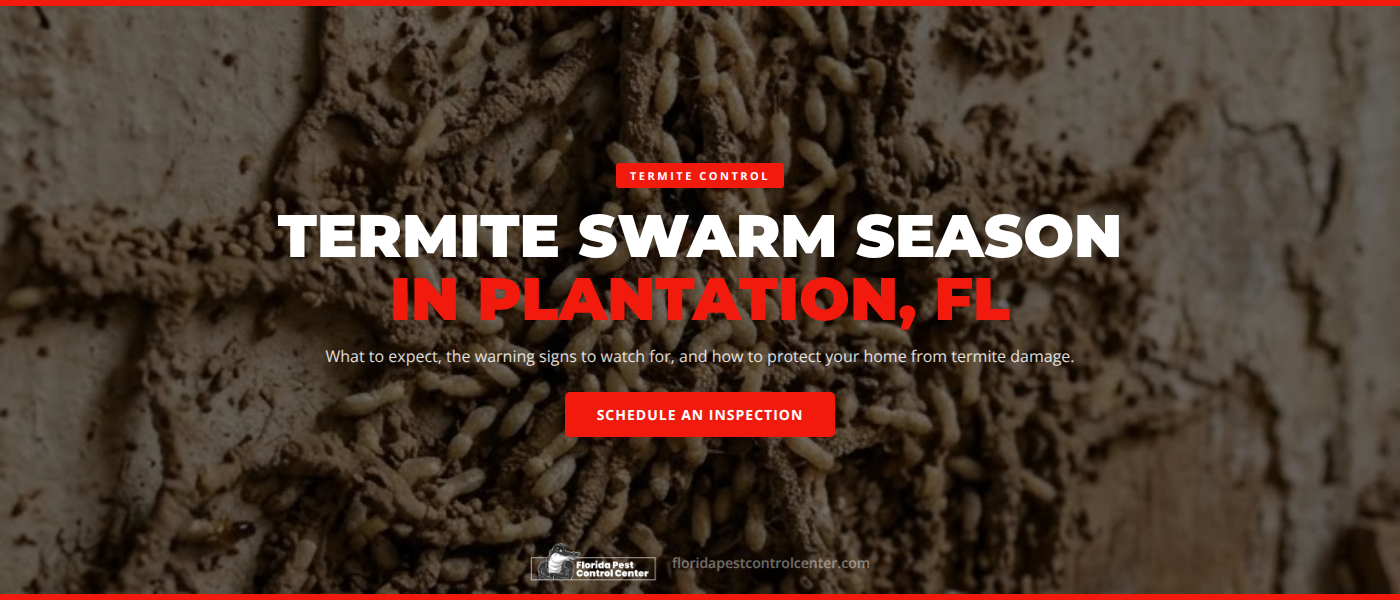
Termite Swarm Season in Plantation, FL - What to Expect
If you own a home in Plantation, FL, termite swarm season is something you need to take seriously. Every year, as temperatures rise and humidity climbs across Broward County, millions of winged termites emerge from mature colonies to establish new nests, and many of them end up inside local homes. At Florida Pest Control Center, we help homeowners throughout the greater Fort Lauderdale area understand what termite swarm season means for their property and how to respond quickly when swarmers appear.
What Is Termite Swarm Season in Plantation, FL?
Termite swarm season is the period when reproductive termites, called swarmers or alates, leave their parent colony in large numbers to mate and start new colonies. In Plantation, FL and the rest of South Florida, this season spans from late winter through summer, with different termite species swarming at different times within that window.
Swarming is triggered by a combination of warm temperatures, high humidity, and rainfall. After a warm spring rain, you may suddenly see hundreds or even thousands of winged insects flying near windows, light fixtures, and doorways. This event often catches homeowners off guard, but it is actually one of the most important warning signs that a mature termite colony is already established nearby, possibly inside your home's structure.
What many Plantation homeowners do not realize is that by the time you witness a swarm, the parent colony has been active and feeding on wood for at least three to five years. Swarmers are only produced by mature, well-established colonies. This means that a swarm inside your home is not the beginning of a termite problem. It is evidence that termites have been silently causing damage for years.
Termite Species That Swarm in Plantation, FL and When to Expect Them
South Florida is home to multiple termite species, each with its own swarming schedule. Understanding which species are active and when they swarm can help you stay vigilant throughout the year.
Eastern Subterranean Termites
Eastern subterranean termites are the most common termite species in Florida and are responsible for the majority of termite damage in Plantation. These termites typically swarm from February through April during daylight hours, often after a warm rain. Subterranean termites nest in the soil and build mud tubes to reach the wood in your home. Their colonies can contain hundreds of thousands of workers, all feeding on the structural wood of your property around the clock.
Asian Subterranean Termites
Asian subterranean termites are an invasive species that has established a significant presence in Broward County. Large swarms of this species have been documented in the Fort Lauderdale area. Unlike Eastern subterranean termites, Asian subterranean termites tend to swarm at night and are strongly attracted to lights. Their colonies are aggressive feeders and can cause damage at an accelerated rate compared to native species.
Formosan Subterranean Termites
Often referred to as super termites, Formosan termites are among the most destructive termite species in the world. Their colonies can contain millions of individuals, far exceeding the size of native subterranean termite colonies. Formosan termites typically swarm from late spring through early summer, usually in the evening hours. A single Formosan colony can consume wood at a rate that causes noticeable structural damage within months rather than years.
West Indian Drywood Termites
Drywood termites are a major concern for Plantation homeowners because they do not need soil contact to survive. They establish colonies directly inside wood structures, attics, wall voids, and even furniture. West Indian drywood termites typically swarm from June through September, with peak activity during the hottest and most humid months. Because they live entirely within the wood they are consuming, drywood termite infestations can be particularly difficult to detect until significant damage has occurred.
Warning Signs of Termite Swarms in Your Plantation, FL Home
Recognizing the signs of termite activity early can mean the difference between a manageable treatment and extensive structural repairs. Here are the key indicators every Plantation homeowner should watch for during swarm season and throughout the year.
Swarmers Indoors
The most obvious sign is seeing winged termites flying inside your home, typically near windows, sliding glass doors, or light fixtures. Swarmers are attracted to light, so they often congregate around these areas. If you see a swarm indoors, it means a mature colony is established within or directly beneath your home's structure.
Discarded Wings
After swarmers land and pair off, they shed their wings. Finding small, translucent wings scattered on windowsills, countertops, near doorways, or around light fixtures is a strong indicator of recent swarming activity. Even if you missed the actual swarm, piles of shed wings confirm that termites are present.
Mud Tubes
Subterranean termites construct mud tubes along foundation walls, support piers, plumbing pipes, and other surfaces that provide a path between the soil and wood in your home. These tubes are typically about the width of a pencil and can appear on both interior and exterior surfaces. Check your foundation, garage walls, and any exposed surfaces in your crawl space or attic regularly.
Frass and Kick-Out Holes
Drywood termites produce small, pellet-shaped droppings called frass that accumulate in piles near infested wood. You may also notice tiny holes in drywall, wood trim, or painted surfaces where termites push their droppings out of their galleries. These kick-out holes are often the first visible sign of a drywood termite infestation.
Hollow or Damaged Wood
Tap on door frames, baseboards, window trim, and any wood near the ground level or in your attic. Wood that sounds hollow or feels soft may be extensively damaged by termite feeding. You may also notice paint that appears blistered or bubbled, which can indicate termite activity beneath the surface.
Why Plantation, FL Homes Face Elevated Termite Risk
Plantation sits in the heart of Broward County, where the subtropical climate creates near-perfect conditions for every major termite species found in Florida. The combination of year-round warmth, high humidity, frequent rainfall, and abundant wood-frame construction makes this area one of the highest-risk regions for termite damage in the entire country.
Florida's mild winters mean that termite colonies never go dormant. While swarming is seasonal, the worker termites in established colonies feed on wood 24 hours a day, 365 days a year. A colony that swarms in March has been feeding since it was first established, and it will continue feeding long after the swarmers have dispersed.
Many homes in Plantation were built during periods of rapid development, and construction practices varied widely. Homes with stucco exteriors over wood framing, wood-framed additions, wooden fence posts in contact with soil, and untreated wood in attic spaces are all at heightened risk. Even newer homes can be vulnerable if preventive termite barriers were not installed during construction or have degraded over time.
What to Do If You See Termite Swarmers in Your Plantation, FL Home
If you witness a termite swarm inside your home, it is important to stay calm and take the right steps. Do not attempt to spray the swarmers with insecticide, as this will only kill the visible insects without affecting the colony that produced them. Instead, follow these guidelines:
- Collect a sample: Capture several swarmers in a sealed plastic bag or jar. This will help our team identify the exact species and determine the most effective treatment approach.
- Note the location: Record where you saw the swarmers emerge. Were they coming from a wall, a window frame, the floor, or near a light fixture? This information helps us pinpoint the colony's location during inspection.
- Do not disturb the area: Avoid poking at mud tubes, pulling apart wood, or spraying chemicals near the swarm site. Disturbing the area can cause termites to relocate their activity, making treatment more complicated.
- Contact a professional immediately: A termite swarm indoors indicates an established, mature colony that requires professional treatment. The sooner we can inspect and assess the situation, the sooner we can begin protecting your home.
How We Treat Termite Infestations in Plantation, FL
At Florida Pest Control Center, our approach to termite treatment is thorough, targeted, and designed for lasting protection. We understand that every home is different, and we customize our treatment plans to address the specific species, severity, and structural conditions we find during inspection.
For subterranean termite infestations, we use liquid termiticide treatments applied to the soil around your foundation to create a continuous barrier that eliminates foraging termites and prevents new colonies from accessing your home. We also offer baiting systems that target the entire colony, including the queen, for complete elimination.
For drywood termite infestations, treatment options include localized spot treatments for isolated colonies and whole-structure fumigation for widespread infestations. Our team will recommend the most effective and least disruptive option based on the extent of the infestation and your home's construction.
Frequently Asked Questions About Termite Swarm Season in Plantation, FL
When is termite swarm season in Plantation, FL?
Termite swarm season in Plantation spans from late winter through summer, with subterranean termites swarming as early as February and drywood termites swarming through September. The peak period for subterranean species is March through May, while drywood termite swarms peak from June through September. Because South Florida hosts multiple termite species with overlapping swarm schedules, there is really no month when termite swarming is entirely off the table.
What should I do if I find termite wings in my Plantation, FL home?
Finding discarded termite wings indoors means that swarmers have recently been active in or near your home. Collect the wings and any intact swarmers for species identification, note where you found them, and contact our team for an inspection. Do not assume the problem is over just because the swarm has passed. The parent colony is still actively feeding on wood in or around your home.
How can I tell the difference between termite swarmers and flying ants in Plantation, FL?
Termite swarmers have straight, bead-like antennae, a thick waist with no constriction, and two pairs of wings that are equal in length. Flying ants have elbowed antennae, a clearly pinched waist, and front wings that are larger than their hind wings. If you are unsure, place a few specimens in a sealed bag and our team can identify them for you.
Do termites stay active year-round in Plantation, FL?
Yes. While swarming is seasonal, the worker termites in established colonies feed on wood continuously throughout the year. Florida's warm climate means there is no winter dormancy period for termite colonies. A colony that exists in or near your home is causing damage every single day, regardless of whether it is currently swarming season.
How often should Plantation, FL homeowners schedule termite inspections?
We recommend annual termite inspections for all Plantation homeowners, even if you have not noticed any signs of activity. Because termites can cause significant damage before any visible evidence appears, regular professional inspections are the most reliable way to catch infestations early. Homeowners who are buying or selling property should also ensure a current termite inspection is part of the transaction process.
Protect Your Plantation, FL Home From Termite Swarm Season
Termite swarm season in Plantation, FL is not something to ignore or hope will pass without consequence. The swarmers you see are a visible symptom of a much larger problem happening behind your walls and beneath your floors. At Florida Pest Control Center, we have the experience, tools, and treatment options to identify the species threatening your home and eliminate them completely.
Do not wait until you see damage to take action. Contact us today to schedule your termite inspection and ensure your Plantation home is protected before swarm season reaches its peak.