

Palmetto Bugs After October King Tides in Hollywood, FL: Why Roaches Come Up Through Your Drains
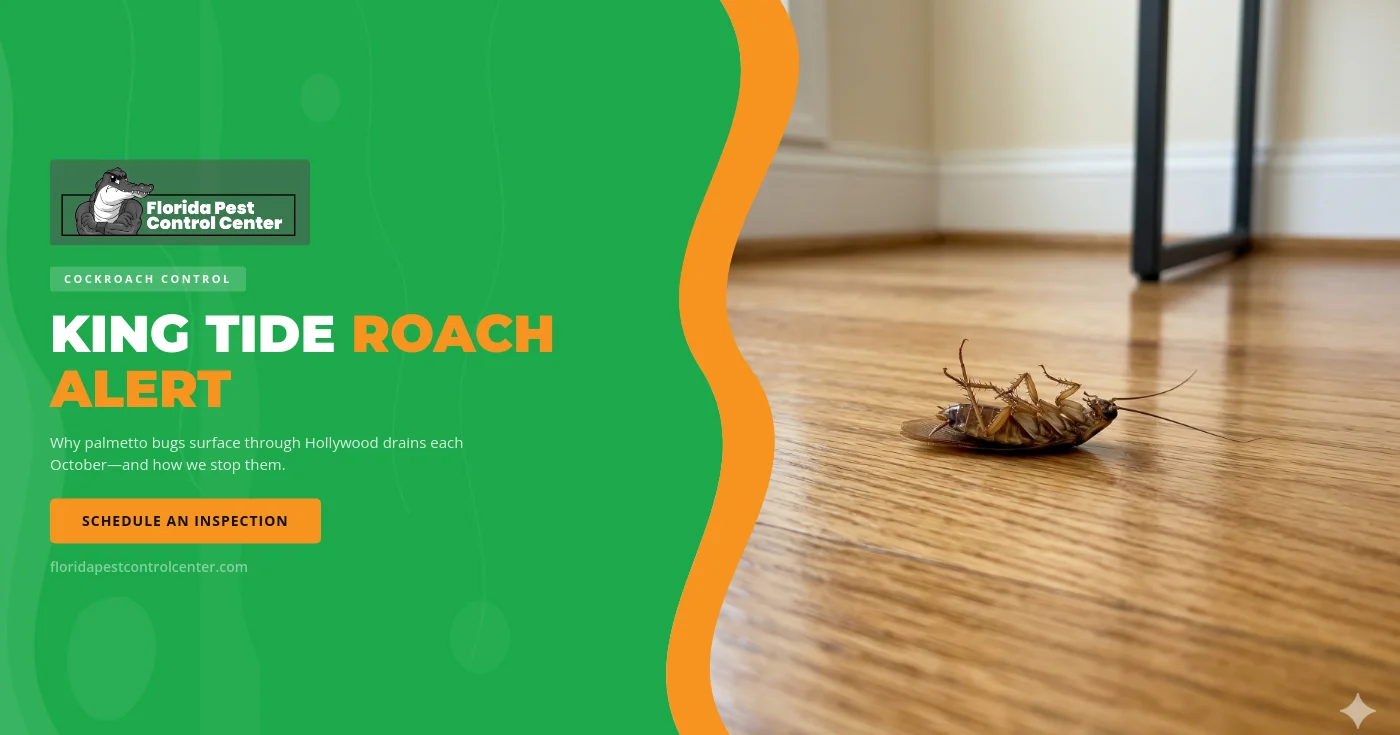
Palmetto Bugs After October King Tides in Hollywood, FL: Why Roaches Come Up Through Your Drains
You flip on the bathroom light at midnight and there it is: a two-inch, reddish-brown roach sitting beside the shower drain. If that sounds familiar this fall, you’re not alone. It’s a big reason homeowners start looking into palmetto bug control Hollywood FL every October, and the timing isn’t random.
Fall brings South Florida’s king tides, the highest predictable tides of the year. As seawater backs into storm drains and low-lying sewer lines, the American cockroaches living down there look for higher ground. Your plumbing is often the nearest exit.
Here at Florida Pest Control Center, we see this pattern every season. Below, we explain why it happens, how to tell which roach you have, where they get in, what you can do yourself and how professional treatment stops them.
Why October King Tides Drive Palmetto Bugs Out of Hollywood's Sewers and Storm Drains
King tides happen when the positions of the moon and sun combine to pull ocean levels higher than usual. In South Florida they usually peak from September through November, around the full and new moons. You can look up predicted high tides for nearby stations such as Port Everglades on NOAA Tides & Currents, which makes these events easy to plan around.
The problem is that many coastal storm drain outfalls sit close to, or below, the water line during these tides. Water flows backward into the drain system and causes “sunny-day” flooding on streets that never saw a cloud.
The American cockroach is a major sewer pest. According to the University of Florida’s IFAS entomology program, it lives in sewers, storm drains, steam tunnels and utility vaults, and it regularly enters buildings through floor drains and plumbing. When rising water floods those dark, humid hiding spots, it’s reasonable to expect the roaches to be displaced upward. We’re not aware of a study that measures this directly, but the calls we get each fall tend to line up closely with the tide calendar.
Displaced roaches follow moisture and airflow, and they’ll squeeze through any opening that leads to a damp, quiet space. Bathrooms, kitchens, laundry rooms and garages are common first stops. Because adults can glide in warm weather, some also show up near porch lights and entry doors after a high-tide evening.
Palmetto Bug vs. German Cockroach: Knowing Which Roach You're Dealing With
“Palmetto bug” is the Southern nickname for the American cockroach (Periplaneta americana). Getting the identification right matters, because the two most common roaches in local homes need very different treatment.
American cockroach (palmetto bug)
- About 1.5 inches long as an adult
- Reddish-brown with a pale yellowish band behind the head
- Both sexes have wings and can glide or fly short distances
- Lives outdoors, in sewers and in storm drains, then wanders indoors
German cockroach
- Much smaller, roughly ½ to ⅝ inch
- Tan, with two dark stripes behind the head
- Breeds indoors near kitchen and bathroom moisture
- Rarely comes in from drains or the yard
If you’re finding large roaches near drains a few at a time, you’re most likely dealing with sewer cockroaches coming in from outside. If you’re seeing many small tan roaches in cabinets or behind the fridge, that points to German cockroaches breeding inside, which calls for targeted baits and growth regulators rather than perimeter work.
American cockroach females drop or glue egg cases that each hold roughly 14 to 16 eggs, and adults can live about a year. A few stragglers can become a resident population if conditions allow.
The Most Common Entry Points: Floor Drains, Dry P-Traps, Cleanouts and Utility Gaps
Palmetto bugs in drains don’t chew their way in. They use openings that already exist, and these are the ones we check first.
Floor drains and dry P-traps
Every sink, tub, shower and floor drain has a P-trap, a curved section of pipe that holds water and blocks sewer air and sewer pests. When a trap dries out, that seal disappears. Guest bathrooms, rarely used garage or laundry floor drains and homes left empty all summer are prime candidates. In our experience, a dry trap is one of the most common reasons roaches come straight up a shower drain.
Cleanouts and damaged pipes
Sewer cleanouts with missing or cracked caps give roaches a direct route from the main line. Older homes with original cast-iron drain lines may also have cracks, corrosion or failed joints that let pests into wall voids or under the slab.
Utility gaps and exterior openings
Look where plumbing, electrical, A/C lines and cable enter the house. Worn door sweeps, open weep holes, torn screens and gaps under garage doors also let roaches in once they surface from a nearby storm drain. The same openings often admit rats and mice, which is why we sometimes pair roach work with rodent control.
Hollywood Neighborhoods and Home Types Most Affected by Tidal Flooding Roach Activity
Not every street floods during king tides, but low-lying areas near the Intracoastal Waterway and the city’s canals can see water in the road for a few hours around high tide. Areas often mentioned include Hollywood Lakes and the North and South Lake area, the beach barrier island along the Broadwalk, canal-front streets in Emerald Hills and blocks near the West Lake edge. Flood risk varies street by street, so it’s worth checking the city’s flood information and FEMA flood maps for your address.
The home types we hear from most often include:
- 1920s–1950s homes with original cast-iron drain lines that may have cracks or failed joints
- Slab-on-grade houses with garage or laundry floor drains that rarely see water
- Beach condos, where shared plumbing stacks and trash rooms let roaches travel between units
- Seasonal homes left empty over the summer, which often have dry traps when owners return in October and November
That last group deserves extra attention. Snowbirds who come back to a closed-up house sometimes find roaches already waiting, because the traps evaporated months ago and the first king tides pushed pests up through the open lines. If you own a seasonal property, ask a neighbor or property manager to run every faucet and drain every couple of weeks while you’re away.
DIY Steps to Block Drain Invasions Before the Next High Tide
You can do a lot on your own before the next high tide. These steps target the most common pathways:
- Run water in every drain weekly. Thirty seconds refills a P-trap. Don’t forget guest baths, wet bars and garage floor drains.
- Add a thin layer of mineral oil to rarely used drains after refilling them to slow evaporation. A plumber can also install trap primers on floor drains.
- Use drain covers or stoppers in showers and tubs at night during king tide weeks.
- Check outdoor cleanout caps and replace any that are cracked or missing.
- Seal utility penetrations with caulk or foam, and replace worn door sweeps.
- Cut moisture and clutter. Fix leaks, dry out under-sink cabinets and pull mulch and leaf litter a few inches away from the foundation.
What about bleach? Pouring it down a drain may kill a few roaches briefly, but it doesn’t restore a dry trap or repair a broken pipe, and it can be harsh on plumbing. It’s a short-term fix at best.
If roaches keep appearing after all of this, there’s likely a hidden issue, such as a damaged line or harborage inside a wall, that needs a closer look.
How Professional Cockroach Control Treats Drains, Perimeters and Harborage Areas
Here at Florida Pest Control Center, our American cockroach control follows an integrated pest management approach: find out how roaches are getting in, close the gaps and treat where they actually live.
Inspection
We check drains, traps, cleanouts, utility entries, garages, attics and the exterior to pinpoint entry points and harborage. We also confirm which species you have, since that shapes the whole plan.
Drain and interior treatment
For sewer cockroaches, we treat drain areas and wall voids with products labeled for that use and place baits along the routes roaches travel. Every product is applied according to its label, with children and pets in mind.
Perimeter and harborage treatment
Outside, we treat foundations, entry points, mulch beds and other damp, shaded spots where palmetto bugs rest. Stopping them at the perimeter means fewer reach your drains and doors.
Exclusion advice and follow-up
We point out the repairs that make the biggest difference, like a missing cleanout cap or a gap behind the water heater, and schedule follow-up visits around peak seasons. Because king tides and standing water also tend to boost biting insects, many customers combine roach treatment with mosquito control.
Keeping Roaches Out as Hollywood Shifts Into Dry Season
Hurricane season officially ends November 30, and dry season usually settles in by late October or November. Humidity drops, nights cool off and roach activity slows. It slows, but it doesn’t stop: American cockroaches stay active year-round here, and they’ll keep looking for warm, damp shelter.
That makes the cooler months one of the best times to get ahead of the problem. A few habits go a long way:
- Keep running water in seldom-used drains through winter, especially if you travel.
- Finish sealing jobs while it’s more comfortable to work outside.
- Trim shrubs and palms back from the house and clear leaf litter.
- Store boxes, firewood and yard debris off the ground and away from walls.
- Keep garbage bins sealed and away from doors.
- Book a follow-up treatment before spring, when warm rains bring activity back.
King tides return every fall. Homes that are sealed and treated now will be in a much better position when next year’s tides arrive.
Frequently Asked Questions About Palmetto Bug Control in Hollywood, FL
Is a palmetto bug the same as a cockroach?
Yes. “Palmetto bug” is a regional name for the American cockroach. It’s larger than most household roaches and spends much of its life outdoors and in sewers, but it’s still a cockroach.
Do king tides bring cockroaches into homes in Hollywood?
They can contribute. When high tides back water into storm drains and sewer lines, it’s reasonable to expect roaches hiding there to move upward, and dry traps or broken pipes give them a way in. We notice more drain-related calls during king tide weeks.
Does seeing one palmetto bug mean I have an infestation?
Not necessarily. A single roach may have wandered in from outside or a drain. If you see several, find them during the day or spot egg cases, it’s time for an inspection.
Are palmetto bugs dangerous?
They don’t bite people in normal circumstances, but they can carry bacteria from sewers onto surfaces, and roach allergens may trigger allergies or asthma in some people. That’s a good reason to keep them out of kitchens and bathrooms.
Book Palmetto Bug Control in Hollywood, FL Before the Next King Tide
King tides are predictable, and so is the roach activity that tends to follow. With a few simple habits and treatment that targets drains, perimeters and harborage areas, you can keep sewer cockroaches where they belong.
Here at Florida Pest Control Center, we’re based in Fort Lauderdale and serve homeowners across Broward County, including the coastal neighborhoods that feel the tides first. If you’re ready for palmetto bug control Hollywood FL homeowners can count on, contact us to schedule an inspection and we’ll help you get ahead of the next high tide.
How Do You Stop Palmetto Bugs From Coming Up Through My Drains?
When fall king tides push water into storm drains and sewer lines, palmetto bugs (American cockroaches) often head for the nearest way out, and that’s frequently your plumbing. We see it every October and November, especially in homes near canals and the Intracoastal.
Here’s how we stop them:
- Thorough inspection: we check floor drains, P-traps, sewer cleanouts, utility gaps and the exterior to find exactly how roaches are getting in.
- Drain and interior treatment: we treat drain areas and wall voids with labeled products and place baits along the routes roaches travel.
- Perimeter protection: we treat foundations, mulch beds and damp, shaded harborage outside so fewer roaches reach your doors.
- Exclusion advice: we point out the fixes that matter most, like dry traps, missing cleanout caps and worn door sweeps.
- Seasonal follow-up: we time visits around king tides and the return of warm, rainy weather.
We also confirm whether you’re dealing with palmetto bugs or German cockroaches, because each needs a different plan. Every product is applied according to its label, with your family and pets in mind.
Want the full story on why roaches come up through drains after high tides, plus DIY steps you can take today? Read our complete guide to palmetto bugs after king tides.