
Pigeons Nesting Under Solar Panels in Cooper City, FL: Why Fall Is the Time to Seal Them Out
Pigeons Nesting Under Solar Panels in Cooper City, FL: Why Fall Is the Time to Seal Them Out
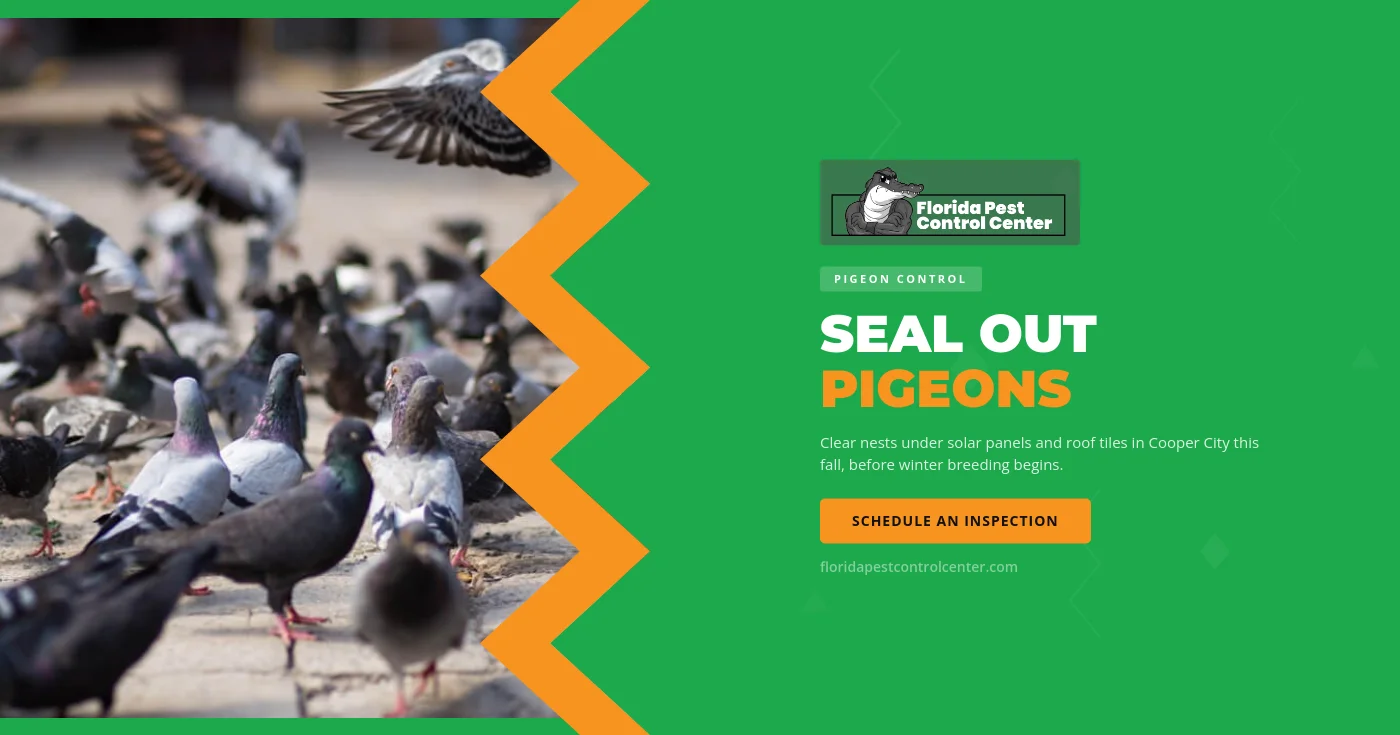
If you’ve heard cooing from your roof at dawn or spotted twigs poking out from beneath your solar array, you’re not alone. Pigeons across our area have learned that the shaded gap under rooftop panels and the open ends of barrel tiles make ideal nesting spots. For homeowners searching for pigeon control Cooper City residents can rely on, the good news is that this problem is very fixable, especially when you tackle it at the right time of year.
Here at Florida Pest, we see the same pattern every fall. Rock pigeons can breed year-round in South Florida’s warm climate. The storms of late summer often leave behind lifted tiles, shifted panel mounts and new gaps that birds move into quickly. Once a pair settles in, they rarely leave on their own.
Below, we explain why pigeons choose solar panels and tile roofs and why October is a smart time to act as hurricane season winds down. We also cover the warning signs to watch for, the damage and health concerns that come with nests, and how professional nest removal and exclusion keep birds out through the winter breeding months.
Why Pigeons Target Rooftop Solar Panels and Tile Roofs in Cooper City
Pigeons are cliff dwellers by nature. In the wild, rock pigeons nest on ledges and in crevices that shelter them from wind, rain and predators. A modern rooftop is the suburban version of that cliff. Many homes here combine two of their favorite features: barrel-tile roofs and a growing number of solar arrays.
The Space Under Solar Panels
The gap between a panel and the roof deck is usually just a few inches tall, which is perfect for a pigeon. It’s shaded from the afternoon sun, hidden from hawks overhead and often warm from the panels themselves. Once one pair finds it, the flat, enclosed area can hold several nests side by side. That’s why pigeons under solar panels tend to become a colony problem rather than a one-bird nuisance.
Open Ends on Barrel Tiles
Concrete and clay barrel tiles leave rounded openings at the eaves and along the ridges. Unless those openings are fitted with closures, they work like ready-made nesting boxes. Pigeons tuck twigs and debris into the gaps, and over time the material builds up under the tiles where you can’t see it from the ground. Add nearby food sources like bird feeders, spilled pet food and fruit trees, and your roof becomes an easy place to settle.
Why October, as Hurricane Season Winds Down, Is the Right Time to Act
The Atlantic hurricane season officially runs from June 1 through November 30, and peak activity usually falls between mid-August and mid-October. By October the busiest stretch has typically passed. That makes it a practical window to assess your roof and close up openings before the next round of nesting.
Storms Open New Doors
High winds can lift tiles, crack mortar at the ridge and nudge panel mounts out of alignment. Each of those small shifts can create a new entry point. A fall inspection lets us find storm-related gaps and address them in the same visit as pigeon nest removal and exclusion.
Getting Ahead of Winter and Spring Nesting
Pigeons here can breed in any month, and a single pair may raise several broods a year, two eggs at a time. Many homeowners notice nesting pick up in late winter and spring. Sealing your roof in the fall means the birds have nowhere to settle when that activity ramps up. The cooler, drier months from November through April also make rooftop work more comfortable and predictable.
One caution: never clear nests during an active storm watch. Sweep loose debris off the roof instead, and save the exclusion work for calm weather.
Warning Signs Pigeons Are Nesting on Your Roof
Pigeons aren’t subtle once they move in, but the early signs are easy to dismiss. Watch and listen for these clues:
- Cooing or scratching sounds near the roofline, especially at dawn and dusk
- Droppings piling up on the driveway, patio, pool deck or a car parked below the panels
- Twigs, feathers or grass poking out from the edges of your solar array or tile openings
- Birds repeatedly flying under the panels or landing in the same spot on the ridge
- White streaks on tiles, panel frames or gutters
- A drop in solar output that your monitoring app can’t explain
Pigeons are strongly loyal to their nesting sites, so once they’ve nested on a roof they return to it again and again. That’s why a few birds can quickly become a dozen. If you notice two or more of these signs, schedule an inspection before the problem grows.
It’s also important to confirm what kind of bird you’re dealing with. Mourning doves look similar and sometimes nest on roofs too, and they are federally protected, so identification always comes first.
How Pigeon Droppings and Nests Damage Panels, Tiles and Gutters
A nest under your panels may seem harmless at first, but the damage adds up over a season.
Solar Panels
Droppings and nesting material shade the cells and can reduce how much energy your system produces. The exact loss depends on the system and how much of the surface is covered, but even partial shading can affect output. Nests packed against wiring can also trap moisture, and birds sometimes peck or tug at exposed cables.
Roof Tiles
Pigeon droppings are acidic and can stain or etch concrete and clay tiles over time. Nesting debris tucked under tiles holds moisture against the underlayment, which is exactly what you don’t want in a humid climate. When it comes to pigeon proofing roof tiles, stopping the buildup early is far easier than repairing the damage later.
Gutters and Valleys
Twigs, feathers and droppings wash into gutters and roof valleys and create clogs that send rainwater where it doesn’t belong. During summer downpours, a blocked gutter can overflow onto fascia and walls. Nests and spilled seed can also attract other pests. If you’ve noticed scurrying in the attic as well, our rodent control team can take a look.
Health Risks of Pigeon Nests Near Your Home
Beyond the mess, pigeon nests can raise health concerns for your household. Dried droppings may carry the fungi behind histoplasmosis and cryptococcosis, along with bacteria such as Salmonella and Chlamydia psittaci, which causes psittacosis. According to the CDC’s histoplasmosis resources, the fungus is linked to soil and material contaminated with bird or bat droppings. People can breathe in spores when that material is disturbed.
The risks may be higher for young children, older adults and anyone with a weakened immune system. If you have concerns about symptoms, talk with your doctor. Nests can also bring bird mites, tiny pests that may wander indoors through vents or windows once the birds leave.
Why Cleanup Isn’t a DIY Job
Sweeping or power-washing dry droppings can kick spores into the air. NIOSH guidance on histoplasmosis recommends wetting the material before removal and wearing proper respiratory protection. Add the fall risk of working on a tile roof around delicate panels, and cleanup is a job best left to a trained crew with the right gear.
How Professional Pigeon Control Works in Cooper City: Nest Removal, Cleanup and Solar Panel Exclusion
Here at Florida Pest, we follow a step-by-step process that removes the current problem and keeps it from coming back:
- Inspection and bird identification. We confirm the species, look for active nests with eggs or young, and map every entry point under the panels and along the tiles.
- Pigeon nest removal. We clear nesting material and debris, and we handle active nests appropriately for the species and situation.
- Cleanup and sanitizing. We wet and remove the droppings, then treat the area to reduce residue and odors.
- Solar panel bird exclusion. We install galvanized or PVC-coated mesh around the edge of the array. It is attached with clips that fasten to the panel edge, with no drilling into the panels.
- Tile and roofline sealing. We close off open tile ends and gaps at the eaves and ridge with appropriate closures or barriers.
Because the clips don’t require drilling, this method is widely used to avoid conflicts with panel warranties. Warranty language varies by manufacturer, though, so we recommend checking with your installer before work begins. If an HOA governs exterior changes in your neighborhood, review its guidelines too. Fake owls and sound devices tend to lose their effect quickly, since pigeons soon learn they pose no real threat.
Keeping Pigeons Off Your Cooper City Roof Through Winter and Spring
Exclusion is the foundation, but a few habits help keep your roof bird-free once the work is done:
- Remove food sources. Bring pet food indoors, clean up fallen fruit and consider pausing bird feeders near the house.
- Keep gutters clear. Clean gutters and roof valleys after storms so debris doesn’t give birds a head start.
- Check after big weather. Walk the property after a strong storm and look for lifted tiles or mesh that has shifted.
- Watch for returning birds. Pigeons may test the barrier for a while. If they keep perching in the same spot, call us back for a check.
Because our warm climate lets pigeons breed year-round, there’s no true off-season. Bird control South Florida homeowners can count on comes down to consistency: sealing openings, removing attractants and catching new problems early. A quick follow-up visit in late winter can confirm everything is holding before the spring nesting push. Many homeowners pair that check with a broader look at the home through our pest control services, since rodents, roaches and ants often use the same gaps.
Frequently Asked Questions About Pigeon Control Cooper City Homeowners Ask
Will pigeon mesh void my solar panel warranty?
Clip-on mesh is designed to attach without drilling into the panels, which is why it’s commonly used on solar systems. Warranty terms differ between manufacturers and installers, so we always recommend confirming with your installer before exclusion work begins.
Is it legal to remove pigeon nests in Florida?
Feral rock pigeons are generally not protected under the federal Migratory Bird Treaty Act and are typically treated as nuisance birds. Mourning doves are protected, though, and can look similar, so we identify the bird before removing any nest. The Florida Fish and Wildlife Conservation Commission is the best source for current rules.
What if there are eggs or babies in the nest?
We assess active nests during the inspection and plan the work around them. Sometimes that means timing the exclusion so the young birds can leave before the area is sealed, rather than trapping anything inside.
How do I get pigeons out from under solar panels in Cooper City?
The lasting fix combines nest removal, cleanup and mesh exclusion around the array. Scaring birds away without sealing the gap rarely works, because they return to familiar nesting sites.
Protect Your Roof and Solar Investment This Fall
Pigeons under your panels and tiles won’t leave on their own. Because they breed year-round in our climate, waiting usually means more nests, more droppings and more damage. October, as hurricane season winds down, is an ideal time to clear nests, repair storm gaps and install exclusion before winter and spring. If you’re ready for pigeon control Cooper City homeowners can trust, contact Florida Pest to schedule an inspection.
Our team is based in Fort Lauderdale and knows the tile roofs, storms and year-round pests of our region. Learn more about our pest control in Fort Lauderdale and Broward County, and let us help you keep your roof clean, protected and bird-free.
How Do You Stop Pigeons From Nesting Under My Solar Panels?
Pigeons love the shaded, sheltered gap under rooftop solar panels and the open ends of barrel tiles. Once a pair moves in, more birds usually follow, along with droppings, clogged gutters and stained tiles. We take care of the whole problem, from the first nest to the last open gap.
- Inspection and identification: We confirm the species first, because protected doves can look like pigeons. Then we map every entry point under your panels and along your roofline.
- Pigeon nest removal: We clear the nesting material and debris and handle any active nests appropriately.
- Cleanup: We wet droppings before removing them and treat the area to reduce residue and odors.
- Solar panel bird exclusion: We install galvanized or PVC-coated mesh with clips that attach to the panel edge, with no drilling into the panels.
- Tile sealing: We close the open tile ends and gaps at the eaves and ridge so birds can’t simply move to another spot.
Fall is an ideal time for this work. As hurricane season winds down, we can fix storm-related gaps and seal your roof before the winter and spring nesting push. Because warranty terms vary, we recommend checking with your solar installer before we begin. If an HOA governs exterior changes in your neighborhood, it’s worth reviewing its guidelines too.
Want to learn more about the warning signs, the damage and the health concerns pigeon nests can bring? Read our full guide to pigeons nesting under solar panels and see why now is the time to seal them out.